

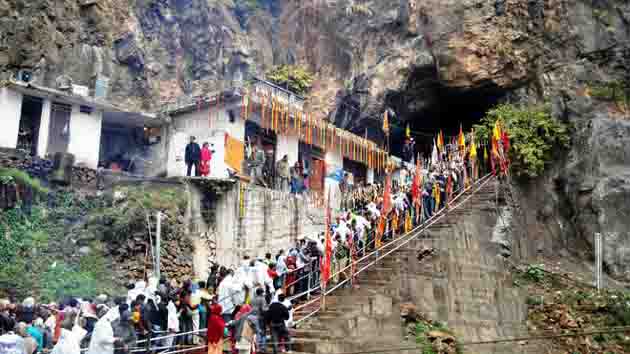
Reasi, Jammu & Kashmir: With Maha Shivratri approaching on 15–16 February 2026, preparations are underway at the revered Shiv Khori cave shrine in Reasi district, as devotees from across India plan to visit the sacred site to offer prayers and seek the blessings of Lord Shiva.
Shiv Khori — literally meaning “Shiva’s cave” — is one of the most prominent Hindu pilgrimage destinations in northern India. The natural cave shrine, dedicated to Lord Shiva, houses a self-formed Shivling that is believed to be swayambhu (self-manifested). The interior of the cave also contains several natural rock formations that devotees interpret as depictions of deities, including Goddess Parvati, Lord Ganesha and Nandi, the sacred bull.
Ancient Legends and Discovery
According to local belief and ancient legends, the sacred cave became holy due to divine events linked to Lord Shiva. One well-known legend holds that the demon Bhasmasur, after performing severe penance, received a boon that gave him the deadly power to annihilate anyone by touching their head. When Bhasmasur sought to use this power against Lord Shiva himself, Shiva entered the cave to escape the demon’s wrath. Lord Vishnu, taking the form of Mohini, tricked Bhasmasur into touching his own head while dancing, causing the demon to perish. Because of this event, the cave and surrounding area are regarded as sacred.
Another popular narrative suggests that the cave was discovered by a shepherd who, in search of his lost goats, stumbled upon the cavern and witnessed sages performing meditation and worship inside. Awed by the place’s spiritual energy, he later shared the discovery, and the site gradually became known as Shiv Khori.
Local lore also mentions that one passage inside the cave is believed to stretch toward the famous Amarnath cave in Kashmir, though the deeper sections remain unexplored due to natural barriers.
Growing Pilgrimage Centre
Originally lesser known, Shiv Khori has gained wide recognition over recent decades, especially after the establishment of the Shri Shiv Khori Shrine Board in 2003 and formal management legislation in 2008. These efforts improved infrastructure, crowd management and basic facilities for pilgrims, making the shrine more accessible and organised year after year.
Maha Shivratri Celebrations
Maha Shivratri, celebrated annually in late winter (usually February or early March), holds special religious significance for devotees of Lord Shiva. The festival, which will be observed on 15–16 February 2026, is marked by night-long vigils, fasting, chanting of Shiva mantras, and special pujas to honor Lord Shiva’s role as the cosmic destroyer and transformer.
At Shiv Khori, authorities are making elaborate arrangements to manage the expected influx of pilgrims, including security deployment, medical services, water and sanitation provisions, and crowd control measures. Officials have also issued advisories for devotees to plan their visit in advance.
As the sacred night of Maha Shivratri approaches, devotees are expressing deep faith and anticipation for darshan and blessings at one of the most spiritual landmarks in Jammu & Kashmir.

